
Every kid has a phase that takes over the house. Dinosaurs, space, slime, Ancient Egypt. These school holidays, the obsession can leave the iPad and head for the kitchen bench.
For the Tots (Ages 3 to 6)
Ice Excavation Dig. Freeze small plastic dinosaurs, gems or toys in a large tub of water overnight. Hand them lukewarm water, pipettes and table salt to melt the ice and rescue the artefacts. Choose toys that are too large to be choking hazards, and supervise younger children.
Salt Dough Fossils and Scarabs. Mix 2 cups flour, 1 cup salt and 1 cup warm water. Press toy dinosaurs, shells or leaves into flattened discs to make “fossils”, or sculpt little scarab beetles. Bake at around 100–120°C until completely dry and hard, checking regularly. Thicker pieces will take longer.
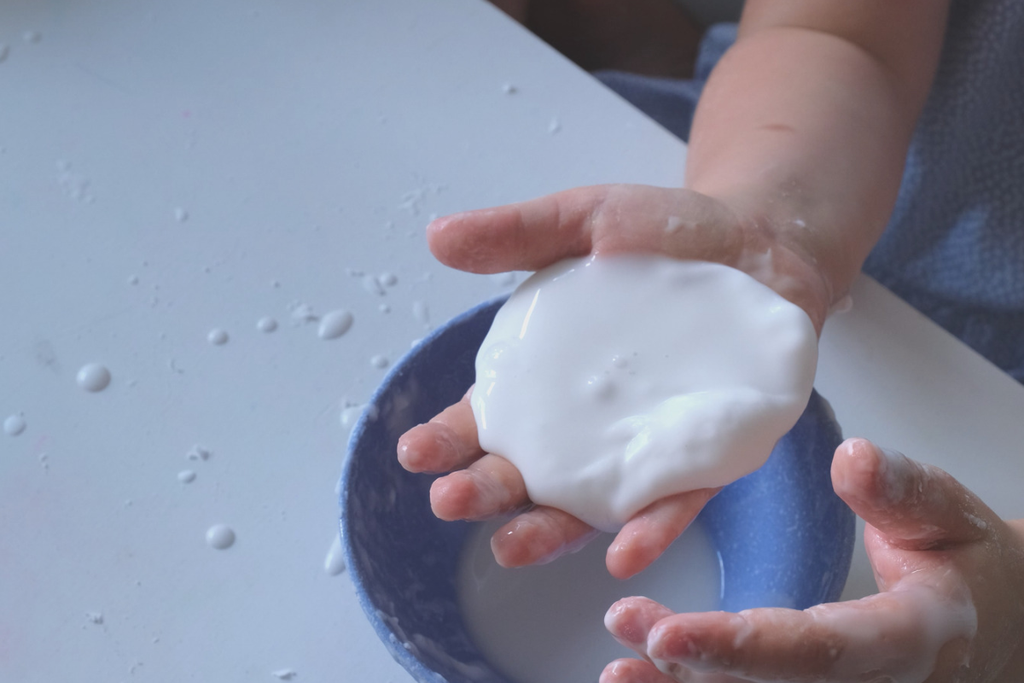
Oobleck Non-Newtonian Slime. Mix 2 parts cornflour to 1 part water. It behaves like a solid when punched or squeezed quickly, but flows like a liquid when left alone. It’s a wonderfully messy way to explore a non-Newtonian fluid.
Magic Milk Fireworks. Pour full-cream milk into a shallow dish and add drops of food colouring. Touch the surface with a cotton bud dipped in dishwashing liquid to watch the colours swirl and scatter. The soap interacts with the milk’s fat and disrupts surface tension, creating movement that carries the food colouring around.
Cardboard Box Time Machine. Give them a massive appliance box, markers and foil to build a pharaoh’s tomb, a rocket ship or a submarine. Let their imagination do the rest.
Walking Water Rainbow. Line up five cups, alternating between full and empty. Add different food colouring to the full cups and bridge them with folded paper towels. Watch the water travel along the towels through capillary action, gradually filling the empty cups and mixing new colours. It can take several hours or overnight.
Kinetic Sand Archaeology. Bury painted rocks or puzzle pieces in a tray of kinetic sand and give them a dry paintbrush to gently uncover their “treasures”. It’s a great way to practise fine motor skills while playing archaeologist.
Cloud in a Jar. Fill a glass jar with water and top it with a thick layer of shaving foam. Drip coloured water onto the foam until it becomes too heavy to hold it, and watch it rain into the jar below. The foam represents a cloud, while the coloured water demonstrates how rain forms when water droplets become heavy enough to fall.
Bubble Snakes. Cut the bottom off a plastic water bottle, stretch an old sock over the cut end and secure it with a rubber band. Dip the sock-covered end in dish soap and water, then blow gently through the bottle’s mouthpiece to create long, colourful bubble snakes. Make sure children blow out rather than suck in.
Frozen Fizzy Baking Soda Eggs. Mix baking soda and a little water into a thick paste, mould it around small toys and freeze until solid. Give kids pipettes of vinegar to dissolve the shells and rescue their hidden treasures. The vinegar reacts with the baking soda, creating lots of exciting fizz. Use a tray to catch the overflow.
For the Tweens (Ages 7 to 12)
Apple Mummification Lab. Cut an apple into four wedges and place them in separate cups: one plain (control), one in salt, one in baking soda, and one in a 50/50 salt and baking soda mix inspired by ancient Egyptian natron. Weigh them daily to track dehydration and observe which mixture removes the most moisture. Ancient Egyptians used naturally occurring natron salts to help preserve bodies, so this is a fun homemade comparison rather than an exact recreation.
Tea-Stained Papyrus Scrolls. Brush strong black tea over standard printer paper and let it dry until it looks aged and crinkled. Use a black marker to write secret messages in Egyptian hieroglyphics or Morse code. For an extra authentic look, carefully roll the finished paper into a scroll.
Red Cabbage pH Potion Lab. Simmer red cabbage leaves in water for around 10–15 minutes, then strain the liquid to create a deep purple indicator. Let kids test household liquids (lemon juice, baking soda water, vinegar and diluted soap) with droppers to watch the liquid shift from pink and red with acids to blue and green with alkaline substances. Neutral solutions generally stay purple.
Grow Your Own Crystal Geodes. Dissolve as much Epsom salt as possible into hot water, stirring until no more will dissolve. Pour the solution into a jar and suspend a pipe cleaner or piece of string inside. Leave it undisturbed for a few days to watch crystals form as the water cools and evaporates. An adult should handle the hot water. Different materials, such as table salt and sugar, form crystals in different ways and need their own methods.
DIY Lava Lamp. Fill a tall bottle two-thirds with vegetable oil and one-third with coloured water, then drop in a small piece of a fizzy Berocca or Alka-Seltzer tablet. Watch the coloured bubbles rise and fall as the tablet releases carbon dioxide gas. The oil and water separate because of their different densities and don’t mix. Never put the lid on while the reaction is happening.
Lemon Juice Invisible Ink. Write a message on white paper using a cotton bud dipped in lemon juice. Once dry, gently warm the paper with a hairdryer (or have an adult use an iron on a low setting) to oxidise the lemon juice and reveal the writing. Keep the heat moving and never leave the paper unattended.
Balloon Rocket Races. Thread a drinking straw onto a long piece of string tied tightly between two chairs. Tape an inflated balloon to the straw, keeping the opening facing backwards, and let it rip to test Newton’s third law. See whose rocket travels the furthest.
Naked Egg Osmosis. Submerge a raw egg in a jar of white vinegar for around 48 hours. The acid dissolves the calcium carbonate shell, leaving a soft, bouncy, translucent egg held together by its flexible membrane. Once the shell has disappeared, place the egg in different liquids, such as water and sugar water, to observe osmosis as water moves across the membrane. Don’t eat the eggs.
Paper Marbling with Shaving Foam. Spread a thin layer of shaving foam on a tray, swirl drops of food colouring through it with a skewer, and gently press cardstock onto the surface to lift a psychedelic marbled print. Scrape away the excess foam to reveal the pattern underneath.
Solar Oven S’mores. Line the bottom of a pizza box with black paper to absorb heat, then line a hinged cardboard flap with aluminium foil to reflect sunlight into the box. Cover the opening with glad wrap to trap the heat, leaving enough room to place chocolate and marshmallows inside. Angle the foil towards the sun and leave outdoors in direct sunlight until everything starts to melt. It may take a little patience, depending on the weather.
For the Teens (Ages 13 and Up)
Find True North Without a GPS (The Shadow Stick Method). Drive a straight wooden stake into a level, sunny patch of lawn. Tie a piece of string to the base and use it to trace a circle in the dirt around the stake. In the morning, mark where the tip of the shadow touches the circle. Wait until the afternoon and mark where the shadow touches the circle again. Connecting these two points gives you an approximate east-west line. Draw a perpendicular line through the centre of the circle to establish north and south. In New Zealand, the midday shadow points approximately south, so the opposite direction is true north. It’s a surprisingly clever way to navigate using nothing but the Sun, a stick and a little geometry.
Water Electrolysis. Fill a glass with water and dissolve a small amount of baking soda into it to help conduct electricity. With adult supervision, place two graphite pencil leads into the solution, keeping them apart, and connect them to a low-voltage battery using suitable insulated leads and alligator clips. Watch as gas bubbles form around the electrodes as electricity drives a chemical reaction that separates water into hydrogen and oxygen. Use an appropriate low-voltage electrolysis kit where possible, work in a well-ventilated area, and keep all flames and sparks away. Never use salt water, as electrolysis can produce dangerous chlorine gas. Never seal the container or attempt to ignite or collect the gases.
Five-Minute Bagged Ice Cream. Put cream, sugar and vanilla in a small zip-lock bag and seal it securely, preferably inside a second bag. Place it inside a larger bag packed with ice and coarse rock salt, then seal that too. Shake vigorously for 5–10 minutes until the mixture thickens into ice cream. The salt lowers the freezing point of the ice, allowing the ice mixture to become colder and draw heat out of the cream fast enough to freeze it. Rinse the outside of the smaller bag before opening to keep salt water away from the ice cream.
Ink Chromatography. Draw dots of different water-based washable markers along the bottom of a coffee filter strip. Stand the strip in a glass with a little water, making sure the ink dots sit above the waterline. As the water travels up the paper, it separates the different pigments hidden inside each marker. Compare the colours to see which inks are made up of the most surprising combinations.
Cardboard Acoustic Speaker. Engineer a passive amplifier for their phone using a cardboard paper towel roll and two plastic or paper cups. Cut holes in the cups to fit the ends of the tube, then place the phone’s speaker close to the opening of the tube. Test different cup sizes and tube lengths to see which shape directs and amplifies the sound most effectively. Experiment with the design to find the loudest, clearest result.
Edible Honeycomb Chemistry. Boil sugar and golden syrup in a saucepan until the mixture reaches the hard-crack stage (around 150–155°C). An adult should handle the hot sugar throughout this experiment. Remove the saucepan from the heat, then quickly whisk in baking soda. The heat causes the baking soda to release carbon dioxide, creating bubbles that foam and set into crisp, airy honeycomb candy. Leave it to cool completely before breaking it into pieces. Hot sugar can cause serious burns, so children should watch from a safe distance.
Build a Camera Obscura. Black out a cardboard box completely, leaving only a tiny pinhole on one side. Place a piece of tracing paper or another translucent material on the opposite side to act as a screen. Point the pinhole towards a bright outdoor scene and watch as an upside-down image appears on the screen. The light rays cross as they pass through the tiny opening, projecting a real-time moving image of the outside world. You can also experiment with a darkened room and a small pinhole in a covered window.
Stomp Rocket Engineering. Build a launchpad out of PVC pipe and an empty 2-litre soft drink bottle, then design paper rockets with different fin shapes and nose cones to test aerodynamics and launch height. Attach the bottle securely to the launcher so squeezing it forces air through the pipe and sends the rocket flying. Launch outdoors, away from faces and fragile objects, and experiment with different designs to see which travels the furthest.
5-Layer Density Column. Carefully pour honey, dish soap, coloured water, vegetable oil and rubbing alcohol down the inside of a tall, clear glass to create five distinct layers. Pour each liquid slowly over the back of a spoon to minimise mixing. The liquids arrange themselves according to their densities, with the heaviest at the bottom and the lightest at the top. The layers may gradually mix, particularly where liquids are compatible, so observe the column soon after making it. Keep the rubbing alcohol away from flames and don’t drink any of the mixtures.
Micro-Ecosystem Terrarium. Layer pebbles, a little activated charcoal, potting mix and living moss or a small suitable plant inside a large glass jar. Add a small amount of water, just enough to lightly moisten the soil, then seal the lid. Place it somewhere with bright, indirect light and watch as condensation forms on the glass before dripping back down into the soil, creating a miniature water cycle. With the right balance of moisture, light and living plants, your terrarium can maintain this cycle for months. If there’s too much condensation, open the lid briefly to let some moisture escape.