


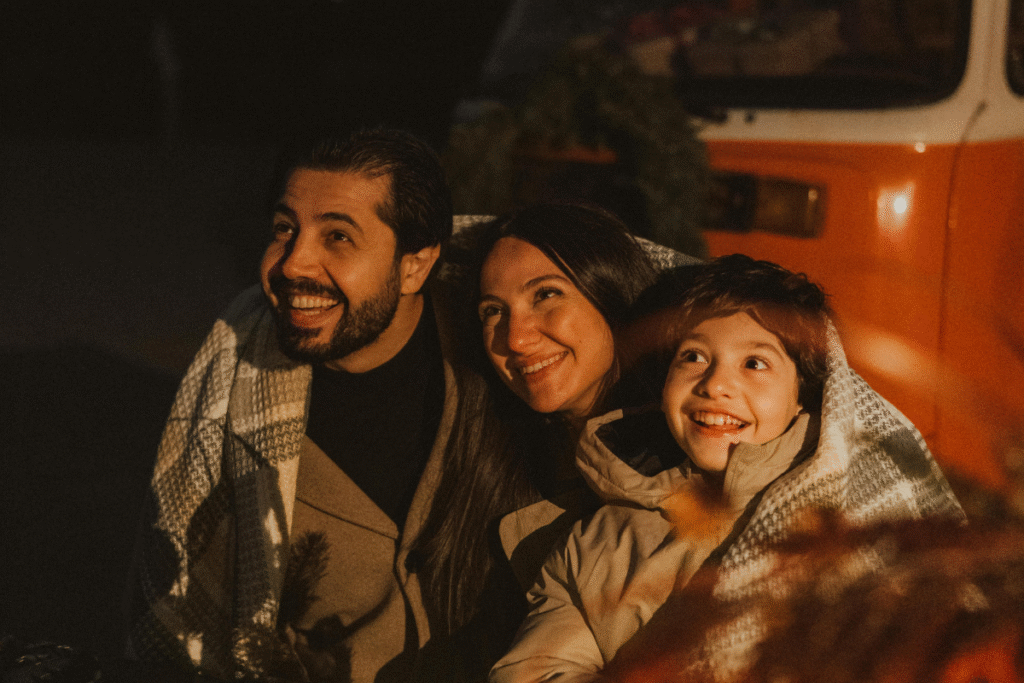
Traditions do not have to involve candles, chanting or matching outfits, although if your family does all three, more power to you. They can be as simple as pancakes on birthdays, a yearly photo in front of the same scraggly tree or a Sunday walk that happens whether anyone feels like it or not.
These repeated moments give kids a sense of rhythm and security. They help children understand that time moves forward, but some things stay steady.
Traditions Build Identity Without Needing a Family Crest
Children are always working out who they are and where they belong. Traditions help shape that story. They say, this is something our family does and this is part of who we are. Some families draw from cultural or religious practices, others invent their own, and many do a mix of both.
A tradition can be:
- the first swim of summer
- a pyjamas until midday holiday
- a chaotic baking session every school break
- a special meal that always appears on the same day
- a song you sing every time you go on a road trip
These repeated moments become part of a child’s internal map of home.
Looking Beyond Your Own Four Walls
Family rituals are important, but there is real value in taking part in cultural moments that belong to the wider community. National days, local festivals, seasonal celebrations and neighbourhood events all help children understand that they are part of something larger than their household.
These shared experiences help children develop:
- empathy
- curiosity
- a sense of belonging
- respect for different ways of living
Whether your family celebrates religious holidays, cultural observances or simply enjoys learning about them, participating with openness helps children appreciate the diversity around them.
How to Start Without Feeling Overwhelmed
You do not need to be an expert to introduce your children to traditions outside your own. A little intention goes a long way.
Try:
- attending a local event or festival
- tasting a food connected to the occasion
- reading a picture book about the meaning behind a celebration
- watching a short video together and talking about what you learned
- asking respectful questions and encouraging your child to do the same
Curiosity is enough. Children learn from the way we approach these moments with interest and respect.
The Benefits Last Longer Than the Event
When children grow up with a mix of family rituals and community traditions, they learn to anticipate joy and recognise the rhythm of the year. They feel grounded and connected. They also learn that difference is something to explore rather than fear.
These experiences help them build a sense of belonging that stretches beyond their immediate family.
You only need moments that repeat and moments that say this matters because we do this together. Traditions help children feel rooted in their family and connected to their community. They remind us that we are part of a bigger story.


)