

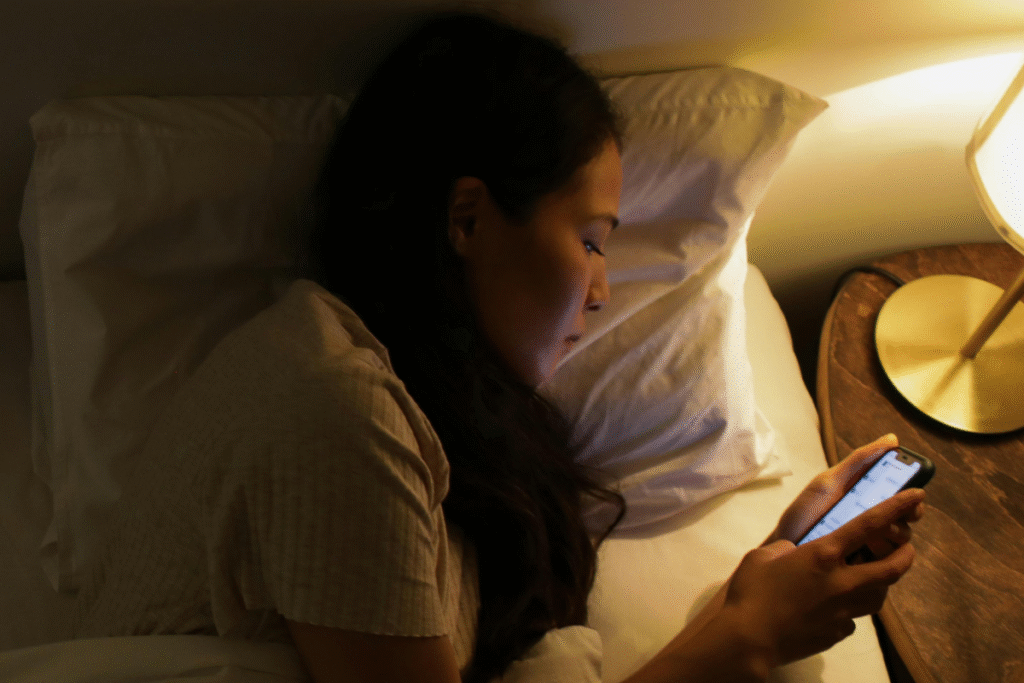
Open Instagram, TikTok, or any parenting Facebook group on any given morning and within thirty seconds you’ll have been told, with complete confidence, at least three contradictory things about how to raise your child. Screen time is destroying their development. A little screen time is fine. Gentle parenting is the only respectful approach. Gentle parenting is raising a generation who can’t handle disappointment. Dummies are essential for sleep. Dummies ruin teeth and speech. Co-sleeping is beautiful and natural. Co-sleeping is dangerous.
The certainty is the tell. Real parenting wisdom — the kind built from child development research, from decades of clinical experience, from actually sitting with thousands of different families — is almost never certain. It hedges. It qualifies. It says it depends. But “it depends” doesn’t go viral.
The internet doesn’t reward nuance. It rewards reaction.
Here’s something worth understanding about where most modern parenting content comes from: the platforms that host it are businesses, and those businesses are optimised for one thing above all else — engagement. Clicks, shares, saves, comments. The algorithm doesn’t distinguish between content that is accurate and content that provokes a strong feeling. It just measures whether you stopped scrolling.
This creates a very specific kind of pressure on anyone producing parenting content. The creator who says “this approach works for some children in some contexts, but there are a range of valid options depending on your family’s values and your child’s temperament” gets a fraction of the reach of the creator who says “if you’re doing this, you’re damaging your child’s attachment system.”
The result is an information environment that systematically overstates how certain we are about parenting, how universal the recommendations are, and how catastrophic the consequences of getting it “wrong” will be. It is, in that way, not really an information environment at all. It’s an anxiety machine dressed up as expertise.
No one can know exactly what’s right for your child
Even genuine experts — researchers, paediatricians, child psychologists — will tell you that child development is extraordinarily complex and variable. Children differ enormously in temperament, sensory sensitivity, attachment style, neurological wiring, and the pace at which they develop. What genuinely helps one child can be irrelevant or even counterproductive for another. This is even true for kids raised within the same home.
A toddler who is intense and highly reactive needs something quite different from a toddler who is easygoing and adaptable — even if they’re the same age, in the same family, with the same parents.
The parenting researcher who knows your child best is you. Not the influencer with 400,000 followers. Not the author of the bestselling sleep method book. Not the commenter in the Facebook group who has very strong feelings about dummies.
A more useful way to approach parenting advice
None of this means online parenting content is worthless. Some of it is genuinely helpful — a technique you hadn’t considered, research you hadn’t come across, a perspective that helps you understand your child’s behaviour a little better. The problem isn’t that advice exists. The problem is the way it’s often packaged: as universal law, with catastrophic stakes, demanding immediate adoption.
A more useful frame is to treat parenting advice the way a thoughtful doctor treats a new treatment option: consider it, assess whether it makes sense for your situation, try it carefully, observe what actually happens, and then make a decision based on evidence from your own life.
In practice, that looks something like this:
When you encounter advice, ask: Does this actually make sense to me, knowing my child? Does the reasoning hold up, or is it just assertive? Is this coming from someone with genuine expertise or someone with a large following?
If it seems worth trying: Apply it consistently for a reasonable period — enough time to actually see whether it changes anything. Keep your eyes open. What do you notice?
Check in honestly: Is this working? Is my child responding well? Does this approach fit our family’s values and practical reality, or does it create more friction than it solves? Is there any indication this is harmful?
Then decide: Keep it, adapt it, or let it go without guilt. You tried it. You gathered real information.
Decades of child development research points, consistently, toward one finding that holds across vastly different family structures, cultures, income levels, and parenting styles: what children need most is the reliable presence of at least one adult who is genuinely attuned to them.
That’s a much quieter message than what dominates the internet. It doesn’t generate the same engagement. It’s hard to build a brand around “show up, pay attention, repair when things go wrong.” But it happens to be what the evidence actually supports.
Trust yourself a little more. And scroll a little less.