
Worried about your children’s teeth? Dr. Darrell Tse from The Dental Practice answers some of your biting questions.
What are some of the most common dental issues in young children?
Some of the most common dental issues in young children are tooth decay (cavities), gum inflammation, and early loss of baby teeth. Cavities often happen when kids eat sugary foods or don’t brush well. Regular brushing, healthy snacks, and dental checkups help keep their smiles strong and healthy.
Facial development can also be affected by habits such as thumb-sucking, mouth-breathing, or tongue-thrusting. These habits can change jaw growth and tooth position if not corrected early.
Should children use a normal or electric toothbrush? And are soft, medium or hard bristles better?
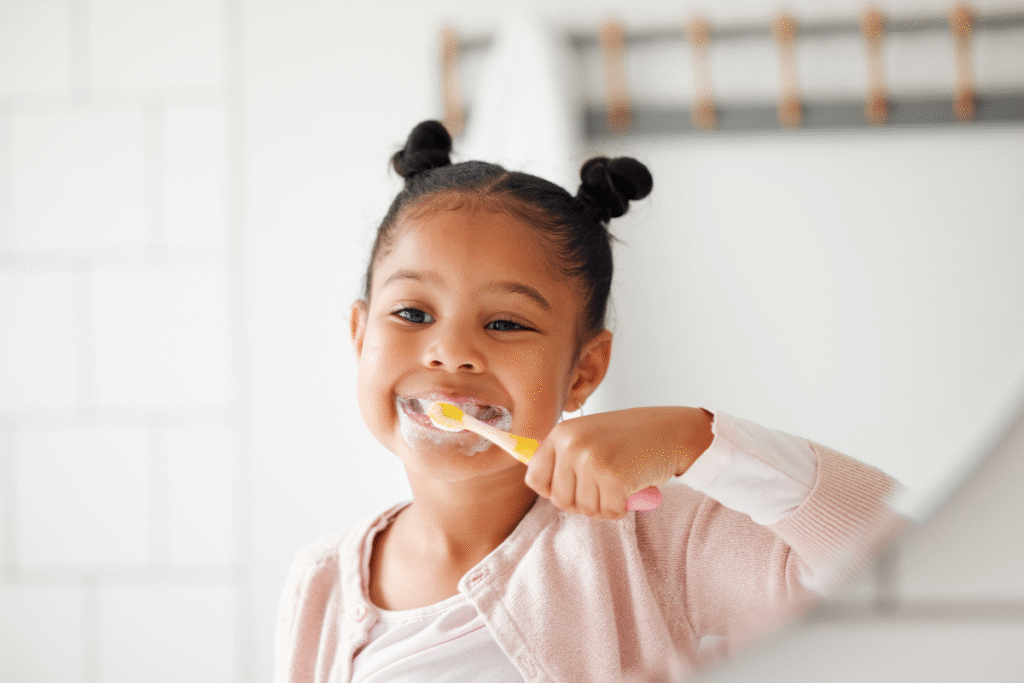
It’s okay for kids to use an electric toothbrush from age three or four onwards, as the handles are usually heavier than a regular toothbrush and the kids will have more dexterity. A simple electric toothbrush is all that is necessary for a small child, as you don’t want it to vibrate or rotate excessively fast for them.
It is always recommended to use a soft toothbrush, as it is more gentle on the gums and actually gets into the grooves and in-between your teeth better. A harder toothbrush has a chance of causing more tooth wear and recession.
The dental nurse says my child has hypomineralisation, what does that mean?
Hypomineralisation (or under mineralisation) is where there is variation in the mineral content in the enamel. This appears as white or yellow/brown discolouration. In the more mild range it just shows up as white spots, but in severe cases, the enamel may be softer and more porous. You can strengthen hypomineralised teeth by remineralising the teeth with products such as Tooth Mousse or use of fluoride varnishes from your dentist or school dental therapist. In back molars, fissure sealants may be beneficial to protect the teeth from dental decay, but it is best to seek advice from your local dental professional.
Fluoride vs non-fluoride toothpaste, which is best?
Fluoride toothpaste is best because it strengthens tooth enamel and helps prevent cavities. Non-fluoride toothpaste can clean teeth but doesn’t protect them as well from decay. However, young children shouldn’t use adult toothpaste, it is recommended they use a junior toothpaste specially designed to have a low fluoride level.
Junior toothpastes are also flavoured to suit children and be low foaming and should be used between ages two and six. Before age two, using just water on a soft infant toothbrush is recommended.
At what age should children first see an orthodontist?
Children should first see a school dental therapist by age seven. At this age, their adult teeth are starting to come through and the therapist can spot any early signs of crowding or bite problems. However, if you are concerned about any orthodontic problems, you can seek advice from an orthodontist or a family dentist who has skills in orthodontics. Early checks help guide jaw growth and make future treatment easier if needed.
What are the early signs that a child might need braces or orthodontic treatment?
Some early signs include crowded or crooked teeth, difficulty biting or chewing, or teeth that don’t meet evenly when the mouth is closed. If front teeth protrude forwards, or if your child has a cross bite or reverse bite – where the lower jaw sits very backwards or protrudes very forward – are also early signs of concern.
Clues parents can look out for are mouth-breathing, thumb-sucking, or the jaw shifting to one side when talking or eating. If you notice these signs, a visit to your family dentist or school dental therapist can help check if orthodontic care may be needed later on.
How do thumb sucking or dummy habits affect teeth alignment? When should parents intervene?
Thumb-sucking or dummy habits can push the front teeth forward and affect how the jaws grow, leading to bite or speech problems over time. This can also narrow the upper jaw and prevent the lower jaw from growing correctly.
I recommend to avoid using dummies from the outset. There are some babies who can sleep without a dummy right from the beginning, so don’t introduce one unless you really have to. If you must use a dummy, try intervention and stop its use between 12 and 18 months.
How long does orthodontic treatment usually take?
Orthodontic treatment can vary greatly. Some children may require early intervention in primary or intermediate school, whereas other children may not need any orthodontic treatment until they are teenagers at high school.
Usually early orthodontic intervention may be a short course of treatment for six to nine months, whereas braces (or Invisalign) treatment as a teenager typically takes 12 to 24 months. Of course there are variations to this, depending on each situation.
Are there ways to prevent the need for braces altogether?
While genetics plays a large role in how a child’s teeth and jaws develop, there are some environmental factors and everyday habits that can help reduce the need for braces later on.
Avoiding habits like thumb-sucking, tongue-thrusting, and mouth-breathing can make a big difference. Encourage your child to drink from a cup instead of a straw or a sports bottle (to avoid the sucking action). Encourage nasal breathing and keeping your lips lightly together, as a normal posture encourages better dental and facial development. If allergies make nose breathing difficult, talk to your doctor about ways to improve this.
There is also a benefit to eating whole foods rather than highly processed food, as this encourages chewing and using the mouth muscles correctly, which also helps strengthen the jaw and support healthy facial development.
Dr. Darrell Tse is a general family dentist with a Clinical Diploma in Orthodontics and Dentofacial Orthopaedics. With more than 25 years’ experience, he helped establish The Dental Practice, which is located in Botany, Auckland.