
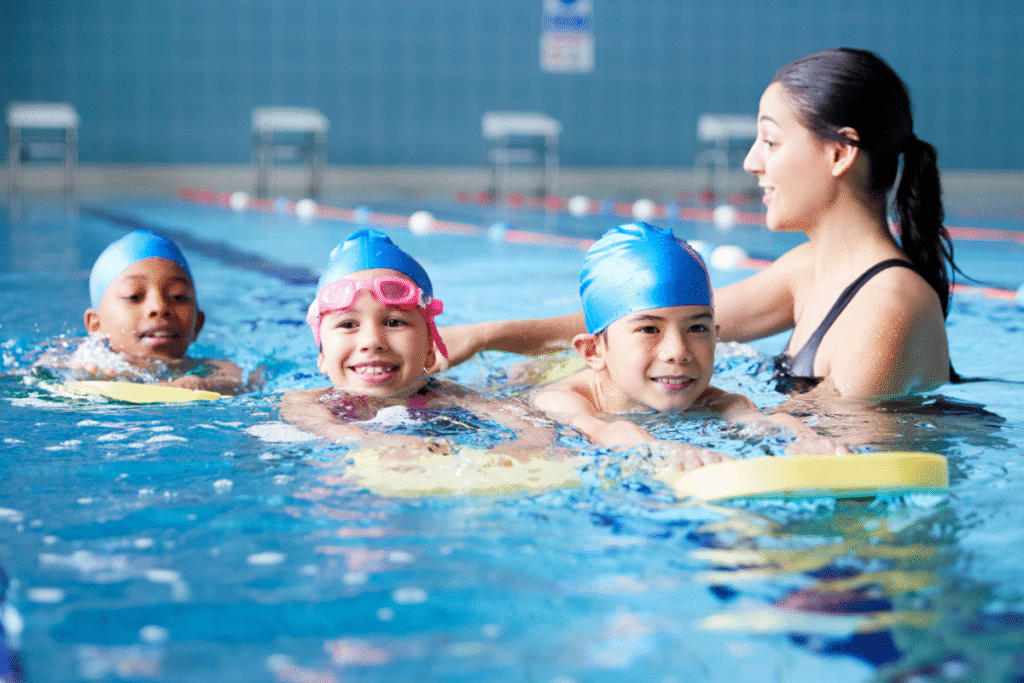
If your child or tween doesn’t know how to swim, it’s not too late for lessons.
New Zealand is surrounded by water so one of the most vital skills our children need is swim safety. According to the 2023 Swim Safer Report, nearly half (43%) of New Zealand children did not attend swimming lessons. Additionally, 38% of families believed their children were too young to learn to swim.
Statistics from Water Safety New Zealand show that New Zealand has a high fatal drowning rate compared to other Western nations such as Australia, Canada and the UK. For the past 10 years, our rate has been 1.6 per 100,000 of population and for 2024, the rate was 1.4. In comparison, Australia’s per capita rate is 1.1 and Canada’s 1.3.
It’s important that all children achieve the basic swimming skills they need to have fun and stay safe in the water, so if you have stopped lessons with your children – or if you never started – it is not too late to get them into the pool.
Does age matter?
Research comparing children between the ages of three and eight indicates the optimum age to begin formal swimming lessons is around five to seven years.
But children can still learn to become safe and competent swimmers in later primary years and into high school.
We know this because adults can, and do learn to swim later in life.
Research also suggests older children may learn to swim more quickly than younger children, so they may need fewer lessons to attain skills than their younger counterparts.
Make sure lessons are regular
If you have an older child starting swimming lessons, it’s important to maintain regular classes to ensure they maintain their skills.
For example, a 2018 study on a group of 149 Latino children in the United States aged three to 14 showed those who had learned the most skills had the highest attendance – attending at least 10 lessons over an eight-week period.
If weekly lessons are too difficult, you could consider holiday intensive programmes and supplement this with informal practice in the water. Research shows informal swimming – such as playing – can help children build their swimming skills if they are also having lessons.
There are barriers to regular lessons
Some families find it difficult to commit to swimming lessons and, on top of the cost, there may not be a local pool available or enough instructors.
These barriers disproportionately impact people from low-socioeconomic backgrounds and those living in rural and remote areas.
Swimming in schools
In New Zealand schools, learning to swim and water safety is a required part of the New Zealand Curriculum, aiming for all students to acquire basic aquatic skills by the end of Year 6. Water Skills for Life (waterskills.org) has developed lesson plans for the various age stages of Years 0–2, Years 3–4, Years 5–6 and Years 7–8, with a focus on essential survival skills relevant to the beach, river, lake and pool. Schools have the option of funding their own pools, using public facilities, or partnering with local providers to deliver the programmes.
But schools also report challenges in teaching kids how to swim. Not all swimming lessons are funded, and schools are short-staffed and dealing with a crowded curriculum. And for some children, who are behind in their swimming skills – or who cannot swim at all – a short burst of school lessons may not be enough to catch them up.
We need to do more
In school
Schools still have a vital role to play in ensuring children are not missing out on developing these minimum, lifesaving skills. Royal Life Saving Australia says the following four measures would help prevent drownings:
- Increased funding for existing school and holiday swimming programmes
- Increased grants targeting people with vulnerabilities to drowning, including those from refugee, migrant, and rural communities
- Increased access to lifesaving programmes in high schools
- Building and refurbishing public swimming pools and swim schools
At home
When choosing a learn-to-swim school or provider, look for swim schools that are Water Skills for Life approved.
If your child isn’t learning Water Skills for Life at school, ask their teacher to enquire about it. If they are, be sure to check their progress by asking them and their teacher; and build on the skills they are learning at the pool or beach by creating activities based on what they’ve learned.